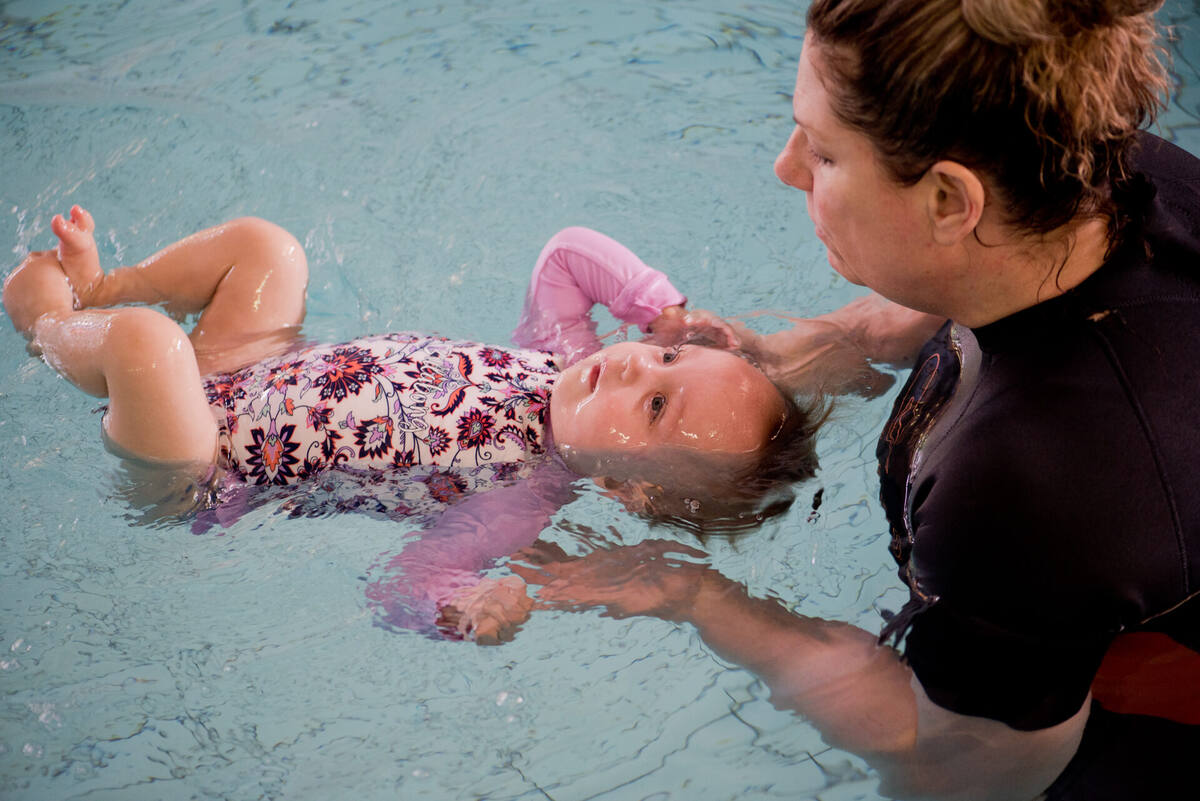
Our Self-Rescue programme uses the Les Bébés Amphibies International method to help babies aged 6–24 months practise rolling, balance in a back-float and calm breathing. Sessions are one-on-one with the instructor, with parents seated nearby to observe. Progress varies with readiness and regular practice; neither floating ability nor survival in an accidental water entry can be guaranteed. Our enrolment terms specify Baby Floating sessions of 5–15 minutes depending on progress.
What you will learn:
- Practise rolling from face-down towards a back-float with instructor guidance
- Develop balance and calm breathing during supervised floating practice
- Discuss readiness and progress with your instructor
- Maintain skills through regular practice — lifelong retention is not guaranteed
- Strictly one-on-one with the instructor — parents seated close by to observe
- Typical duration: 3 to 4 months, depending on lesson frequency
- Personalised gold-mounted Amphibies Babies Africa coin awarded on qualification
Lessons do not make a child drown-proof and do not guarantee survival. Always provide active adult supervision, keep young children within arm's reach around water and maintain secure pool barriers. Training never replaces these safeguards.
In Our Classes
What this programme looks like
The Amphibies Self-Rescue Water Safety Method, photographed in Lizette Botha's own classes — from the very first water-familiarisation lesson on the pool steps, through to the personalised gold-mounted coin earned on qualification.
 Phase 1
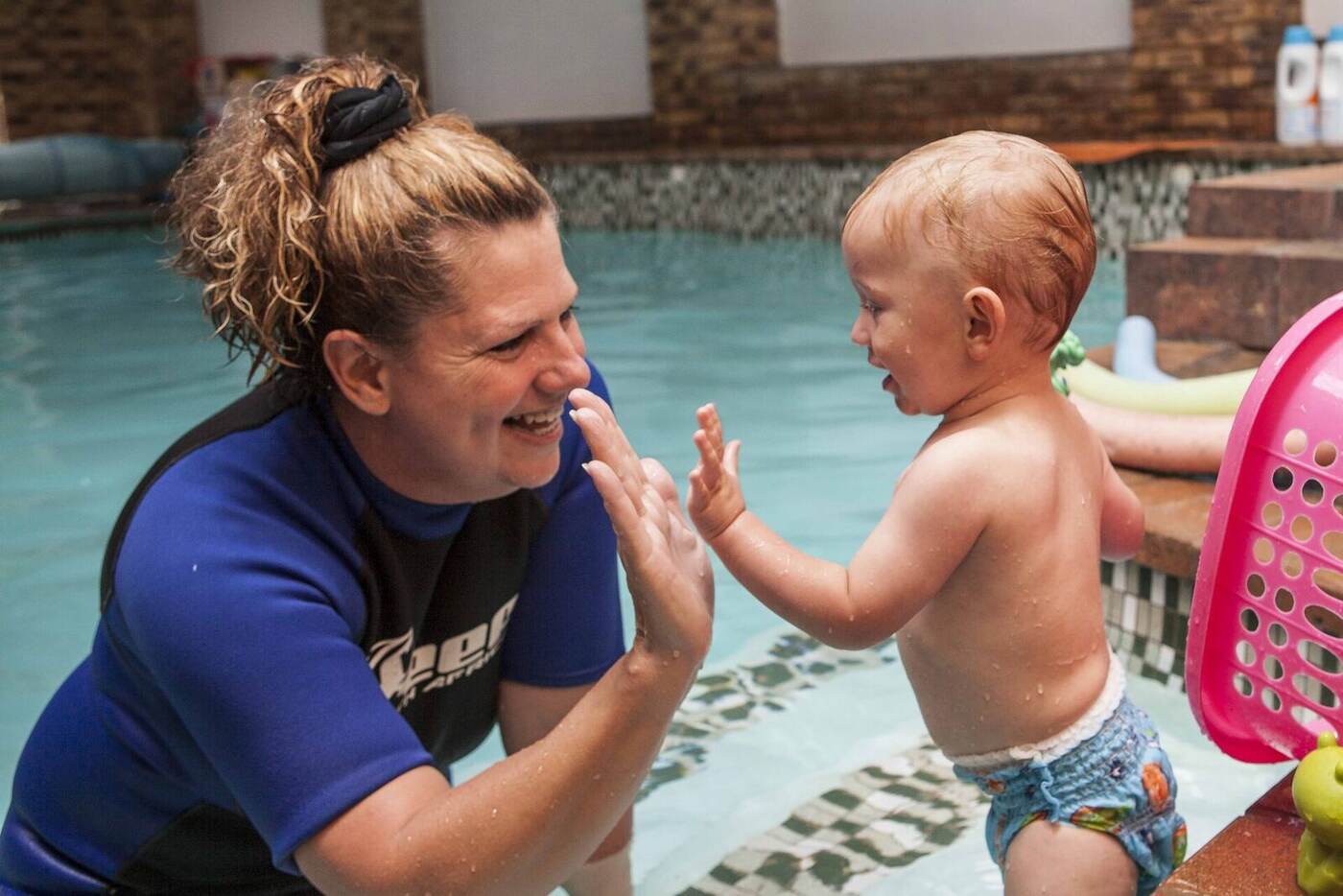
Water familiarisation
Every journey begins on the steps. Lizette spends the early lessons building trust, eye contact, and a baby's first joyful associations with the warm-water pool — long before any floating work begins.
_1779831278561-Cr1aZDJM.jpg) Phase 2
Phase 2Supported back-float introduction
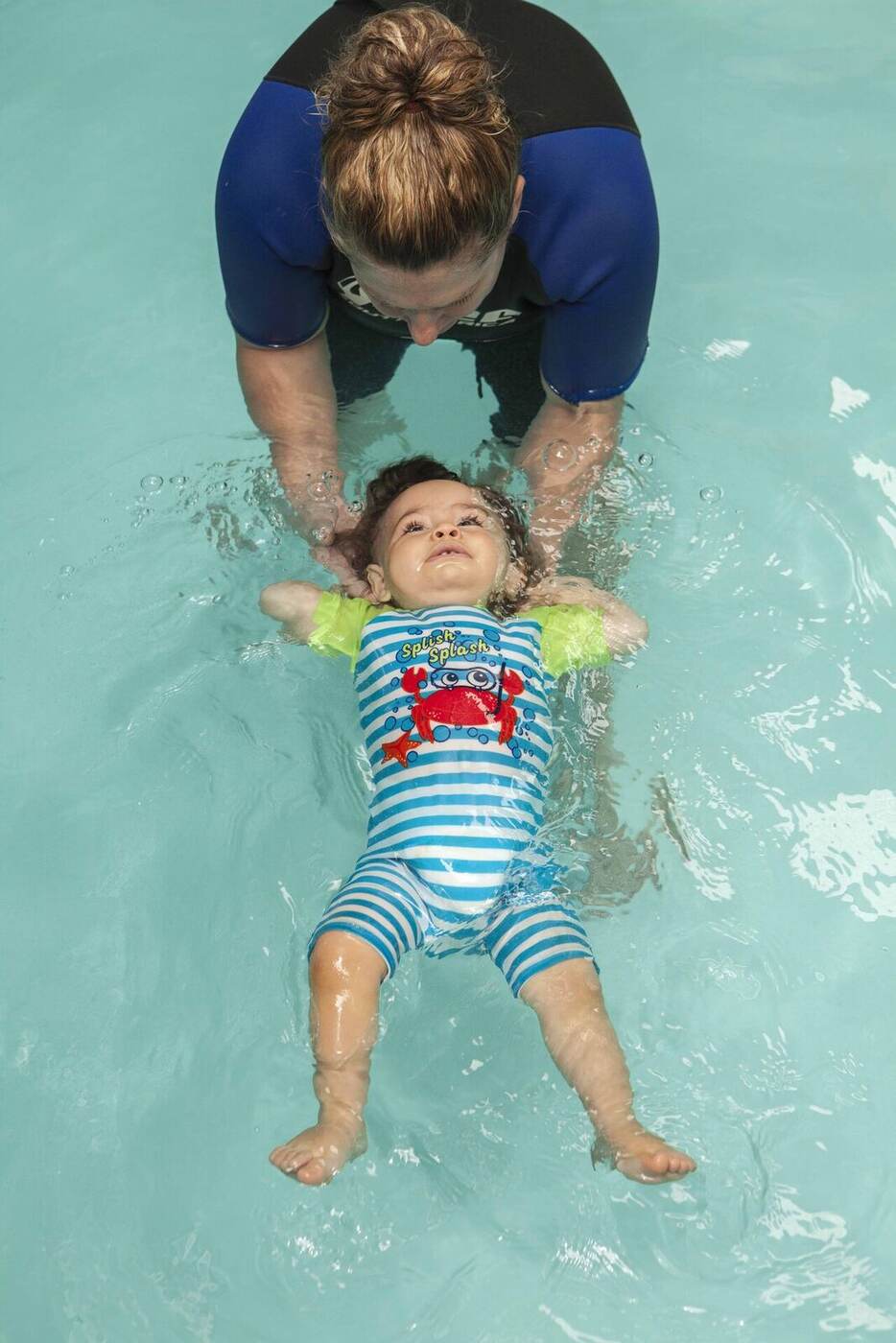
The baby is introduced to the back-float position with full hands-on support from Lizette — head cradled, body relaxed. This is where the infant's natural buoyancy (their body density is nearly the same as water) is gently revealed to them.
 Phase 3
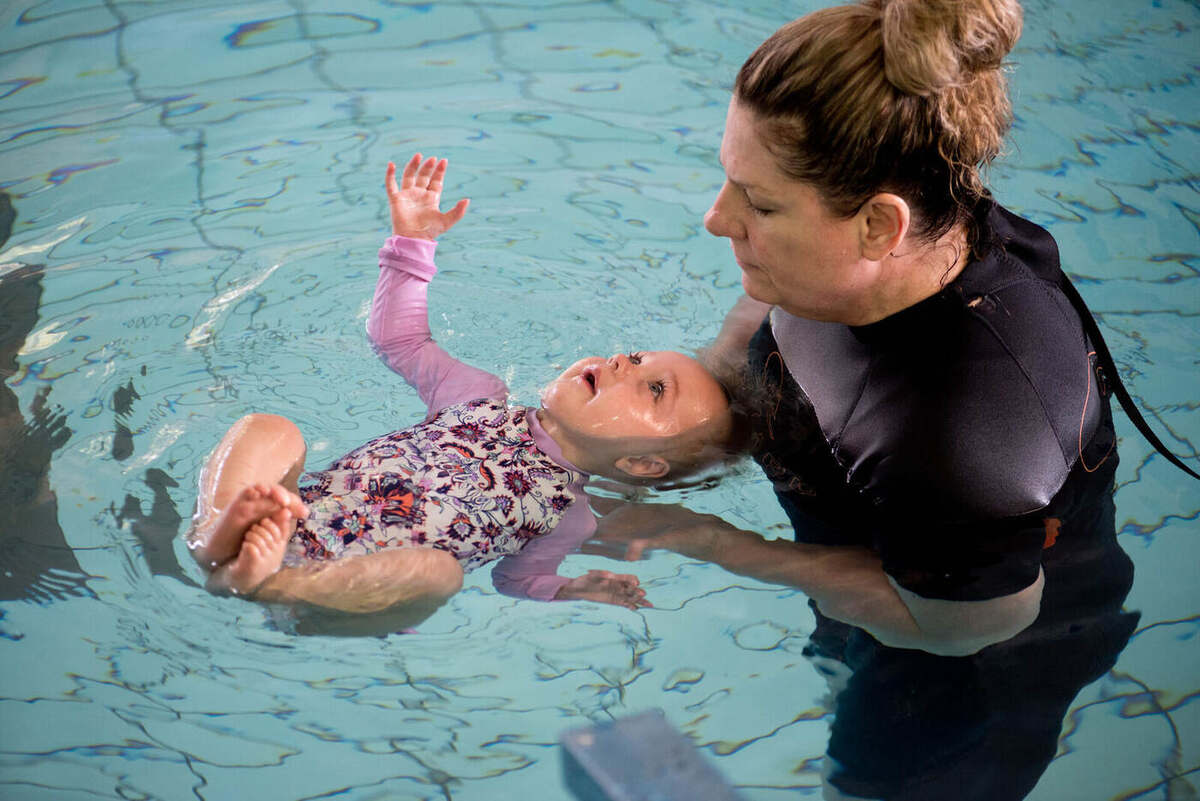
Progressive support reduction
Hands quietly come away. The baby learns to balance and to breathe calmly with their respiratory tract above the waterline. Lizette stays in close attendance — never further than her own hands — while the infant takes more and more of their own weight.
 Phase 4
The 15-minute qualification float
The standard is uncompromising: a baby must float independently on their back — fully unsupported, fully conscious, fully breathing — for a minimum of fifteen minutes. That is not a target. It is the minimum window for a realistic rescue.
_1779831278563-zfnrbbu0.jpg) The outcome
The outcomeA lifelong reflex — fully clothed, fully alone
Qualification floats are performed in full clothing, because accidents happen when children are dressed. Once entrenched, the floating reflex is never unlearned. Decades later, the now-grown swimmer will still fall back onto this skill in an emergency.
 The awardKeepsake
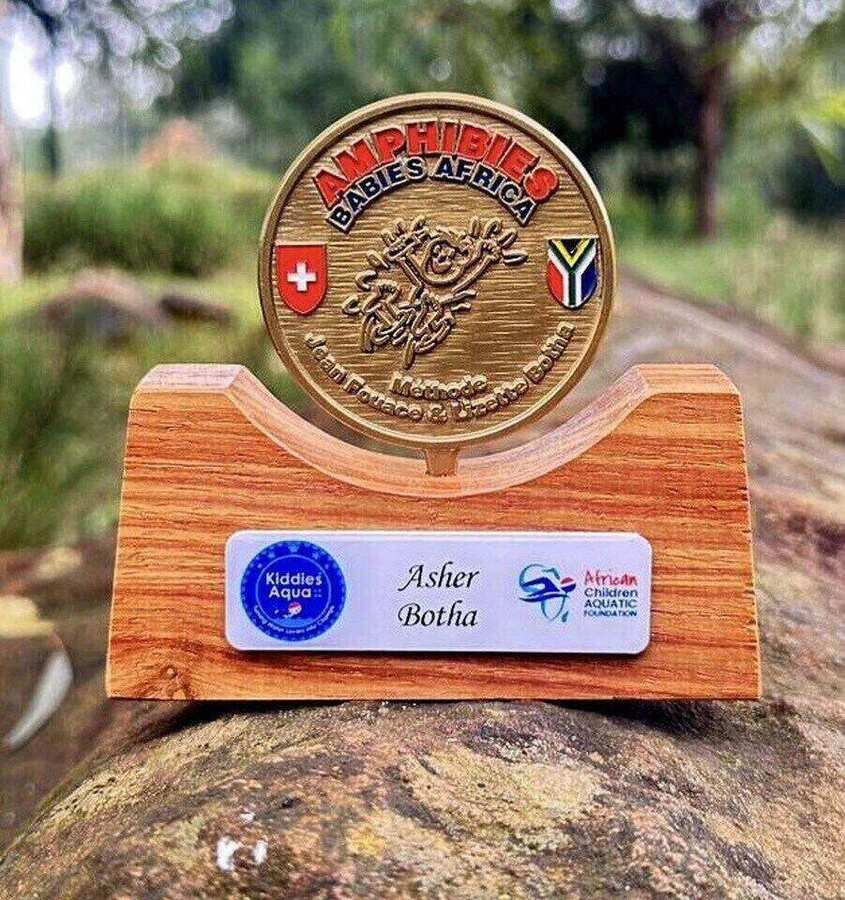
Personalised Amphibies Babies Africa coin
Every baby who completes the qualification float is awarded a personalised gold-mounted coin — engraved with the child's name, carrying the Swiss and South African flags of the Jean Fouace × Lizette Botha method, mounted on a hand-finished wooden stand. A tangible mark of a life-saving skill.
Every photograph above was taken at Kiddies Aqua Swimming Academy. Lessons are one-on-one with an instructor and parents observing nearby. Progress and programme duration vary; confirm instructor availability and the lesson plan with your branch.
Ready to experience it for free?
Your first lesson is 100% free — no obligation, no joining fee.
Ready to start?
Book a free assessment lesson today to experience the KASA difference.
Book Free LessonLizette Botha
With over 37 years of aquatic teaching experience since 1989, Lizette Botha is the founder of Kiddies Aqua and the author of our entire teaching methodology. She holds international certification in the Les Bébés Amphibies method and has personally trained every KASA instructor.
"Every child deserves to feel safe and free in water — that belief is at the heart of everything we do."
Read Lizette's Full StoryFirst Lesson Free
Help Your Child Build Water Skills
Discuss your goals and programme suitability with our team. Request a free assessment lesson — no commitment and no joining fee. Programme availability varies by branch.